Cash Flow Management: Is Your Cash Problem Temporary or Structural?
Diagnose temporary versus structural cash shortages and choose the right cash flow management, cash flow optimization, financing or advisory response.
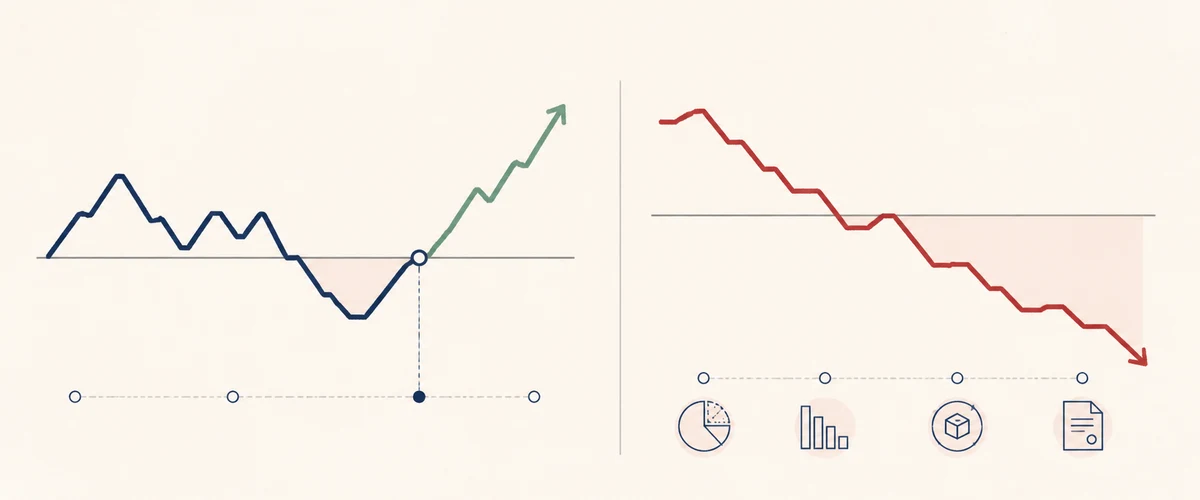
Key takeaways
- Cash flow problems come in two kinds: temporary (a timing gap — the money is real and coming) and structural (the model itself loses or consumes cash).
- The fastest test: if you stopped growing tomorrow, a timing problem eases — a structural problem stays, or gets worse.
- Financing a timing gap is smart. Financing a structural gap just funds the losses and deepens the hole.
- Four structural culprits: broken unit economics, thin or negative margins, a working-capital cycle that swallows growth, and debt service that eats operating cash.
- Diagnose before you fix — bridge a timing gap with a forecast and short-term cash; fix a structural problem in the model, not the bank.
In my experience, two very different problems hide behind “we’re short on cash” — and they need opposite fixes. Bridge the wrong one and you dig a deeper hole. Here’s how I tell them apart.
This is my take on a question I get asked constantly: we’re short on cash — is it a real problem, or just a rough patch? Believe me, almost every business hits a cash crunch. The mistake I see again and again is treating them all the same — reaching for the same fix, find more cash, fast, no matter what actually caused the gap.
Consider two businesses with the same immediate symptom: neither has enough cash for its next payment run. The distributor has $40,000 in the bank, $60,000 of bills due, and a reliable $100,000 customer invoice that will arrive two weeks late. It faces a temporary $20,000 shortfall, but the sale is profitable and committed cash will close the gap. The consumer brand, by contrast, sells each order for $120 while product, shipping and transaction costs total $132. Every order creates a $12 cash loss, and there is no receivable coming later to make it whole. Both are short of cash today; only the distributor has a timing problem. The brand has a structural business-model problem that growth will make worse.
That distinction is the starting point for practical business cash flow management: determine whether cash is delayed or whether the business model is destroying it.
Get the diagnosis wrong and you do one of two things: you panic over a gap that would have closed on its own, or you borrow your way deeper into a model that was never going to work. Let me show you how I tell them apart — and what to do about each.
The one distinction that changes everything
In my view, every cash flow problem is one of two kinds. Temporary means timing — the money is real and coming, there’s just a gap before it lands. Structural means the model itself — the business loses or consumes cash by design, and more activity only makes it worse.
| Temporary (timing) | Structural (the model) | |
|---|---|---|
| What it is | A gap before real money arrives | The business loses or consumes cash by design |
| Is the cash coming? | Yes — a receivable, contract or booked order | No — nothing behind the gap to collect |
| What more sales do | Close the gap | Make it bigger |
| If you stop growing | Problem eases | Problem stays or worsens |
| Financing it | Smart — buys time for real money | Dangerous — funds the losses |
| The right fix | Bridge it | Fix the model |
The most expensive mistakes I see are a healthy business that panics at a two-week gap, and a broken one that keeps borrowing through it. Same instinct — reach for cash — opposite outcomes. The diagnosis is worth more than the funding.
What a timing problem looks like
A timing problem always has real, committed money behind it — a receivable, a signed contract, a booked order — and simply a gap before that money lands. The cash dips, then recovers on its own.
Take the distributor I mentioned. It has $40,000 in the bank, $60,000 of payments due over the next two weeks, and a $100,000 invoice from a reliable customer due this week. If the customer pays on time, there’s no problem at all. When they pay two weeks late:
| Cash balance | Customer pays on time | Customer pays 2 weeks late |
|---|---|---|
| Week 1 (after paying $60k of bills) | $80,000 | −$20,000 |
| Week 2 | $80,000 | −$20,000 |
| Week 3 ($100k invoice lands) | $80,000 | $80,000 |
Same ending balance. The only problem is a two-week, $20,000 gap — and there’s a real $100,000 behind it. That’s a timing problem — you bridge it and move on. Here’s how I spot one:
- There’s a specific receivable, contract or order behind the gap — money you can point to.
- The gap has an end date. You know roughly when the cash arrives.
- Each new sale adds cash rather than draining it.
- Slowing down would ease the squeeze, not deepen it.
See the gap before it lands. A rolling forecast turns a surprise into a scheduling problem. Grab our free 13-week cash flow template, or read how to build the full model.
What a structural problem looks like
A structural problem is a different animal: there is nothing coming to collect. The business consumes or loses cash as a function of how it operates — so growth, financing and time all make it worse, not better. In my experience, four causes account for most of them.
| Culprit | The tell | Temporary or structural? |
|---|---|---|
| Broken unit economics | You spend more to win and serve a customer than they ever pay back | Structural |
| Thin or negative margins | Each sale contributes little or nothing toward fixed costs | Structural |
| Working-capital deficit | Every dollar of growth ties up more cash in receivables and stock | Structural until the cycle is fixed |
| Debt burden | The business makes operating cash, but debt service eats it | Structural |
Broken unit economics — the SaaS trap
This is the one that fools people — and I have watched it fool good operators. A SaaS business spends heavily to win customers, and the cash goes out long before it comes back. That burn can be a smart investment or a broken model, and the whole thing comes down to one question: does the customer ever pay it back?
Say it costs $12,000 to acquire a customer, who then pays $1,000 a month at an 80% gross margin — $800 of contribution a month. It takes 15 months just to earn the $12,000 back. Whether that’s temporary or structural depends entirely on how long customers stay:
| Per customer | Fundable investment | Structural problem |
|---|---|---|
| Cost to acquire (CAC) | $12,000 | $12,000 |
| Monthly contribution | $800 | $800 |
| Average customer lifetime | 36 months | 10 months |
| Lifetime value (LTV) | $28,800 | $8,000 |
| LTV : CAC | 2.4 : 1 | 0.7 : 1 |
| Verdict | Cash is coming — fund the gap | Loses money per customer — fix it |
Same burn, same CAC. Retention is what makes it an investment or a leak. For a subscription business, the diagnosis lives in the unit economics — LTV against CAC, and payback — not the size of the burn.
A growing SaaS with sound unit economics has a funding problem, not a cash flow problem — the cash is real, just spread over years. A growing SaaS with weak retention has a structural one, and every extra dollar of growth spend makes it worse. Check your burn rate and runway against payback before you raise to “fix” it.
Thin or negative margins — losing cash on every order
This is the clearest structural problem of all: you lose money on the order itself, before a single fixed cost is counted. I see it creep in through underpricing, rising input costs, or subsidised shipping — quietly pushing contribution margin below zero.
| Per order | Healthy business | Structural problem |
|---|---|---|
| Price | $120 | $120 |
| − Variable cost (product, shipping, fees) | $90 | $132 |
| = Contribution margin | +$30 | −$12 |
| Each new order… | adds $30 toward fixed costs | drains $12 more cash |
With +$30, volume is your friend — every order helps cover the rent. With −$12, volume is the disease: 500 orders a month is $6,000 of cash gone, and growth makes it worse. No amount of financing fixes a negative contribution margin — only pricing or cost does.
A working-capital cycle that swallows growth
Sometimes every sale is genuinely profitable, but you pay for inventory and labour long before your customers pay you. The longer that gap — the cash conversion cycle — the more cash every new order ties up. Believe me, grow fast enough and you can run out of cash while you are fully profitable on paper.
This one is structural only until you fix the cycle: shorten collections, hold less idle stock, use supplier terms. We cover the mechanics in the cash flow management guide, and the working capital calculator shows you the cycle from numbers you already have.
Debt service that eats the cash
I have seen businesses generate healthy operating cash and still be starved, because loan and interest payments take it all. That is not a timing gap — it is a standing claim on every dollar the business makes, until the debt is restructured or paid down.
It hides well, too: loan principal never appears on your P&L, so a business can look profitable while debt quietly drains the bank each month. If operating cash is fine but the account never grows, look at what’s leaving through financing.
The diagnostic — which problem do you actually have?
In my experience you can usually tell in a few questions. The theme running through all of them is simple: is there real money behind the gap, and does the business make or lose cash as it grows?
- Is there a specific receivable, signed contract or booked order behind the gap — real money you can point to?
- Does the gap have an end date, or does it come back every month?
- Does each new sale add cash, or drain it? Is contribution margin positive?
- Do your customers pay back what it costs to win and serve them — is LTV above CAC?
- Is your cash conversion cycle stable, or does every dollar of growth swallow more working capital?
- Can operating cash cover your debt service, or is debt taking all of it?
If you only ask one, ask this:
If you stopped growing tomorrow, would the cash problem shrink — or stay? A timing problem eases when you slow down. A structural problem doesn’t care; it’s baked into the model.
Walked as a path, the diagnosis looks like this:
behind it?
adds cash?
A “no” at either step points the other way.
No committed money behind the gap, or each sale drains cash, means you have a structural problem. Fix the model, not the bank.
Cash flow management: what to do about each
Once you know which problem you are dealing with, the fix is almost obvious — and doing the opposite one is the trap I watch owners fall into.
If it’s temporary — bridge it
- Build a 13-week forecast so you see the gap coming, not the morning it lands.
- Bridge with a short-term line, a delayed discretionary payment, or faster collection.
- Chase the specific receivable — the money is real, so go get it.
If it’s structural — fix the model
- Reprice or cut cost until every sale contributes cash.
- For subscriptions, fix retention and CAC until LTV comfortably beats CAC.
- Shorten the cash conversion cycle so growth stops swallowing cash.
- Restructure or pay down debt so operating cash isn’t consumed.
That second column is what I mean by cash flow optimization — changing how the business makes and keeps cash, not raising more of it. The spiral I most want you to avoid is treating a structural problem as temporary: you borrow to cover this month’s gap, the model produces the same gap next month — now with interest — and the hole deepens every cycle.
Financing buys time only when there’s real money coming to repay it. Against a broken model, a loan doesn’t solve the problem — it schedules a bigger one. Diagnose first; fund second.
When to bring in a cash flow consultant
A cash flow consultant is useful when the same squeeze returns every cycle, growth keeps making cash tighter, or the team cannot agree on which numbers explain the gap. Good cash flow advisory services should begin with the diagnosis: rebuild the cash view, test unit economics and margins, map working-capital timing, and separate debt pressure from operating performance. Only then should they recommend financing, pricing, collections or cost changes.
That is how I separate a temporary cash flow problem from a structural one. If you are staring at a gap right now and you are genuinely not sure which one you have, message me on LinkedIn or email me at anant@ease.pro — I am always happy to talk it through. I hope you have a great day.
Not sure which one you’re looking at?
Telling the two apart — and knowing exactly which lever to pull — is the core of good cash flow management. If you’d like a second set of eyes to run the diagnosis, find where the cash is really going, and build the fix, that’s our cash flow advisory work.
Frequently asked questions
What's the difference between a temporary and a structural cash flow problem?
A temporary problem is timing: real money is coming — a receivable, contract or order — and there's just a gap before it lands. A structural problem is the model: the business loses or consumes cash by design, so growth and time make it worse rather than better.
Can a profitable business have a structural cash flow problem?
Yes. Negative contribution on some products, a cash conversion cycle that swallows growth, or debt service that eats operating cash can all drain a business that looks profitable on paper — because profit and cash aren't the same thing.
How do I know if my unit economics are broken?
Compare what a customer costs to win and serve (CAC) against what they pay back over their lifetime (LTV), and check contribution margin per sale. If LTV is below CAC, or contribution is negative, the model loses money as it grows.
Should I take a loan to fix a cash flow problem?
Borrowing is sensible for a timing gap with real money behind it. For a structural problem it's dangerous — you fund the losses and add interest, deepening the hole each cycle. Diagnose which one you have before you borrow.
What is cash flow optimization?
Changing how the business generates and keeps cash — pricing, margins, collections, the cash conversion cycle and debt structure — rather than simply raising more money to cover the gap. It fixes the cause instead of the symptom.
When should I bring in a cash flow consultant?
When you can't tell whether a gap is temporary or structural, when the same squeeze returns every cycle, or when growth keeps making cash tighter. An outside diagnosis is cheap next to financing the wrong problem.